IHS National Chronic Liver Disease Initiative 2026
Exclusive interview with Matthew A. Clark, MD, FACP, FAAP, Indian Health Service Deputy CMO
By Thomas Adams III, Publisher of Federal Public Medicine
Liver health is a top priority for Indian Health Service. Currently rates among American Indian and Alaska Native communities is the highest of all U.S. population segments, and in response IHS has announced the launch it's national "Chronic Liver Disease Initiative, and Hepatitis C Elimination Pilot Program". This addresses root causes and provides practitioners with comprehensive education and resources to change the course of this epidemic in current and future generations.
Dr. Matthew Clark, IHS' Deputy Chief Medical Officer has managed liver disease alongside clinical and public health professionals throughout his career serving at IHS, also assisting with clinical strategies that continue developing alongside new technologies. I asked him to expand upon some of the key points professionals need to know, and how his experience has helped to support this understanding.
"I'm an internist and a pediatrician by training," Dr. Clark states, "and I've spent almost my entire professional career with IHS. I'm going on 25 years now, and most of that time I have served as a primary care provider and a clinical administrator at local federal IHS facilities in the Four Corners region. I also have served for the last six years as the Alaska Area Native Health Service chief medical officer, and have served for roughly that same period of time as the Chairperson for the IHS National Pharmacy and Therapeutics Committee, which is responsible for formulary management for the agency."
Our most recent initiative announced by Dr. Christensen in October 2025 is our chronic liver disease initiative that is part of a broader group of our IHS national clinical strategic initiatives that date back to 2019," he stated, "which is our our first contemporary national clinical strategic initiative focused on a chronic liver disease with the goal of mitigating the impact in terms of morbidity and mortality in indigenous communities in the United States. Not only is chronic liver disease among the top 10 leading causes of death in the US generally, but it also represents a major health disparity that results in premature death among American Indian Alaska Native people."
CDC data shows that chronic liver disease is the second leading cause of death for non-Hispanic, American Indian and Alaska Natives between the ages of 25 and 54 years. "We identified that this is a major health disparity that required a more concentrated effort to reduce and mitigate those adverse consequences of chronic liver disease in tribal communities", Dr. Clark explains, "That was the basis for the national chronic liver disease initiative that was announced in October of last year. Essentially, we're advocating a comprehensive strategy that is inclusive of education, prevention, screening, early detection, diagnosis, and treatment of not only chronic liver disease, but those conditions and lifestyle factors that contribute to it. We are very much aligned with CDC recommendations for things like universal hepatitis B and hepatitis C screening in persons ages 18 years an older and during every pregnancy, and also universal alcohol use screening as part of our provision of comprehensive care."
"Another general category of screening is risk-based for those who present with risk factors, which supports a comprehensive multidisciplinary approach." Dr. Clark explained, "This includes not only our provider medical staff, but also pharmacy, nursing, care management and referral care staff, IT staff and others that serve and support patients in the community like our community health workers and public health nurses. Through this multidisciplinary and comprehensive approach we are hoping to reduce this health disparity in tribal communities, specifically through early detection and early diagnosis and treatment, but also through prevention as well. We have focused on a few major causes of chronic liver disease including alcoholic liver disease, viral hepatitis including hepatitis B and C infection, Metabolic dysfunction-associated steatohepatitis also known as nonalcoholic fatty liver disease, as well as cirrhosis and liver cancer." He stated, "These are the main areas of focus for this initiative. The initiative and associated materials can be found on the IHS National Pharmacy and Therapeutics Committee website."
I asked Dr. Clark more about the screening efforts, and what types of screening are most effective for the different types of liver disease. He explained, "Going back to the concept of universal versus risk based screenings; for a very long time IHS has implemented universal alcohol use screening as part of our comprehensive services and it's included certainly in our primary care clinics and other care settings, and we know that alcoholic liver disease is one of the leading causes of chronic liver disease in our patient population and more generally as well. Alcohol screening includes asking a series of questions that are intended to identify problematic use in terms of frequency and or quantity that can be harmful to the liver, and then to provide appropriate counseling regarding reducing that risk by reducing alcohol intake. We also support universal screening for viral hepatitis, including hepatitis B and hepatitis C. The CDC's recommendation is for universal hepatitis B and hepatitis C screening at least one time for all persons ages 18 and older, and then for all pregnant persons during every pregnancy. I would really put a special focus on hepatitis C screening, because we have for many years now, almost a decade, had very effective medications for essentially curing chronic hepatitis C infection, which is really a game changer for tribal communities in terms of the risk posed by infection, including the risk of developing cirrhosis, the risk of liver cancer and the risk of premature death, so to have hepatitis C screening is absolutely critical because there's a highly effective treatment. Regarding risk based screenings, one of the most important issues is to screen patients who have known chronic liver disease for evidence of cirrhosis, and there are variety of ways that this can be done including through serum blood testing, or through various types of imaging examinations, probably the simplest of which is known as ultrasound based Transient Elastography also called TE, and there are a variety of different devices that can be used for this purpose but all are basically designed to evaluate for cirrhosis using an ultrasound technique. Another important screening, especially in our population is for non-alcoholic fatty liver disease, or what is now called Metabolic Dysfunction-Associated Steatotic Liver Disease (MASLD). The key here is screening patients with risk factors such as obesity, diabetes, and elevated lipid levels. The types of screenings that we are implementing in IHS support a strategy focused on early detection, early diagnosis, and treatment to mitigate mobility and mortality."
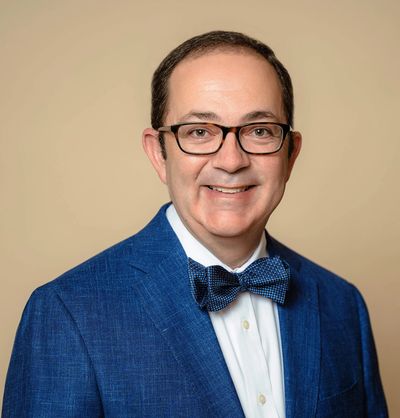
Matthew Clark, MD, FACP, FAAP
Indian Health Service Deputy CMO and Alaska Area Office CMO
With so many of the tribal community living in remote rural areas, IHS also contains a mobile aspect of testing, going to the patient rather than having them come into a hospital or clinic. I asked Dr. Clark to expand upon this and how screening techniques may be different in comparison.
"That is a very pertinent part of the services we provide in tribal communities," he said, "so let me just provide a little bit of background on that. The majority of tribal communities are located in rural and remote locations, but we also have patients living in urban centers where there is better access to higher levels of of care including large hospitals. Most of the healthcare services delivered by the I/T/U system are in ambulatory clinics rather than hospitals, and so while we we do deal with the challenges of the rural and remote nature of providing healthcare to tribal communities, it also comes with something of an advantage because our federal and tribally operated programs are often times co-located with those tribal communities, meaning that access often times is available within the community itself. Another thing is, when we're talking about the various types of screenings for things like alcoholic liver disease and non-alcoholic fatty liver disease, and viral hepatitis, is that it really doesn't require the big equipment for effective screenings. For example, in the case of alcoholic liver disease the screening is verbal, asking questions of the patient, and in the case of viral hepatitis it is with a blood tests. And in the case of non-alcoholic fatty liver disease, very commonly those are also blood tests, even the higher order testing for things like cirrhosis can be done through imaging techniques like TE that can be performed in ambulatory clinics, provided that the equipment is available. I would say that most, if not all of the screening for chronic liver disease can be done in the ambulatory setting in those rural and remote locations. There are still people who who are located some distance from their nearest healthcare facility, so when you think about places like Alaska where you have rural and remote villages that are off the road system and and often times very isolated, or places like the Navajo reservation which is very large and there's considerable distance between where someone may live and where they receive their their healthcare, we do have a system that includes a community public health component, so we have workers that go out and make home visits including community health representatives. One program has public health registered nurses who do this work in the community and through home visitation. I spent many years as a primary care doctor working in rural tribal communities, accompanying a public health nurse for patients who are homebound or have mobility problems, or were otherwise not easily able to access care, and we do try to use some innovative strategies to increase access for patients in those situations whether it be having a provider go out with the public health nurse or community health worker to do an assessment including sometimes a lab draw, or whether it be a community health representative assisting an elder or a disabled person with transportation to get into the clinic for for testing and for treatment, so there are some innovative strategies in IHS that are designed to address those challenges."
This challenge of providing care to those in rural communities or with disabilities has always been a priority for reaching the people who really need the help, and sometimes that's the biggest challenge to overcome. This is an essential part of IHS' strategy as Dr. Clark explained, and also the introduction of combined screenings for different types of diseases. I asked more about how this was being address by their initiative.
"When we talk about cancer screening, Dr. Clark explained, "there are literally dozens if not hundreds of types of cancer, so we screen for the ones that are the most common, for which there are specific screening guidelines. These include breast cancer, colon cancer, lung cancer, liver cancer, and prostate cancer. The best screening for breast cancer is a mammogram which requires a radiology unit, and there are mobile mammography units that can be used. Typically the way those work is by going out into a community and setting up so people will come into the mobile mammography unit, and that's commonly co-located with an ambulatory clinic. For instance, you may have a rural or remote community that has an ambulatory clinic, but they don't have mammography capacity, so they'll arrange for a mobile mammography unit to come out from time to time to set up in their parking lot or somewhere nearby so that people can access their mammogram screening while also accessing their other healthcare at the adjacent ambulatory clinic. Then colon cancer is the other big one that we talk about in terms of screening, and there are two general categories. There's colonoscopy or sigmoidoscopy, which is an invasive exam that can be performed in an operative suite at a regional facility, but typically they're done either in a gastroenterology or general surgery office same-day surgery center, or hospital facility. There are some larger ambulatory clinics that have family practice physicians who are trained and have the capability, equipment, and facilities to do those types of colon cancer screens. However, there are other strategies for colon cancer screening like CT colonography (virtual colonoscopy) that can be done in any facility that has a CAT scanner, but again those would be at some of our larger facilities. And then there's stool based testing, which can be undertaken at the ambulatory clinic or you can just have it sent to your residence where the patient can collect the sample themselves and send it back in a prepackaged return envelope. And some of those screening techniques can be very effective at detecting colon cancer. For lung cancer screening, generally you're talking about people who have a history of smoking where a CAT scan is most commonly used, so again larger facilities are where you commonly find that equipment. But when we talk about liver cancer screening, whether imaging either with ultrasound or CT, typically those things would be done either in a facility with that specific diagnostic imaging capacity, which some of ours do. So in terms of bundling cancer screenings, because of the complexities of how the different types of screenings are done, it really depends on the type of facility that you have access to. Regardless, we promote routine cancer screening for all of our patient population through the most effective means, even if we need to refer them outside of our system for that screening, such as to a regional referral facility or a small hospital near a reservation community.
Combining screenings for related diseases is obviously an effective way of leveraging patient participation while they are already there.
"Essentially this is bundling services to address challenges with accessing care," Dr. Clark explained, "and that's something that IHS has long striven to do through various innovative strategies. There are the social drivers of health that we deal with, especially in tribal communities, such as transportation, poverty, and access to care. There's a long list of social drivers of health that impact whether or not people seek care, and part of our challenge is trying to overcome those barriers and to enhance access.
I asked Dr. Clark to speak more about the IHS hepatitis C elimination project, which is a component of the chronic liver disease initiative, because it has been so successful with it's applications.
"In fact, we have seen substantive improvements in rates of treatment for hep C," he stated, "with using new highly effective antiviral medications or direct acting antivirals as they're called. We added direct acting antivirals to the IHS national core formulary in 2018, which means that all federal direct care facilities and participating tribal facilities have to make those medications available to eligible patients when clinically indicated. After adding those direct acting antivirals to the national core formulary in 2018, we saw near doubling in rates of effective treatment for hepatitis C infection. The rates are still far below where we'd like them, which would be approaching 90 to 100 percent, but there are other challenges such as the social drivers of health to be considered. One of the hallmark features of the chronic liver disease initiative is early detection through screening, diagnosis, and effective treatment for hepatitis C infection, because it's probably one of the most effective strategies for reducing chronic liver disease and liver cancer in tribal communities. And so as part of the chronic liver disease initiative is that we have the hepatitis C elimination pilot program, as well as the pilot community development project that's associated with it where we are seeking to cross pollinate best practices across the IHS system of care."

Indian Health Service professionals provide essential in-home care visits within tribal communities.